Neurobit / Oct - Jan 2024
All-Encompassing Solutions for Health Research Trials
Introduction
Research trials are the most crucial and ideal way to test and calibre various health devices, medicines, vaccines, and health procedures. However, these trials are extensive and very detailed for which the researchers make use of various platforms.
Neurobit Hub is a comprehensive health research platform which enables individuals and organisations to effortlessly conduct research trials by streamlining the various steps involved and providing all stakeholders with valuable features.
Product objective
A health research trial also known as a clinical trial is a study where certain health/biomedical concepts are added after which certain tasks/functions are set for participants to complete. The results collected are further analysed and visualised.
For example: a trial is to be created to analyse HRV (heart-rate variability) and respiratory obstruction (RO) in people with Sleep Apnea using a Movsense device (wearable device with ECG sensors).
These trials include very extensive steps, each step takes anywhere from a few weeks to a few months. And multiple tools and platforms are needed for conducting these trials.
The prime objective of Neurobit Hub is to handle health research trials from creation to conclusion.
Research
The goal of the research was to learn how clinical trial works and what processes are involved in conducting a successful trial. The overall research can be categorised into three parts:
Secondary research on the prevalent methods of health research trials
I conducted secondary research to understand better how clinical trials are conducted. Another goal of this process was to get acquainted with the terminologies involved in these trials.
Interviews of researchers who had ongoing health research trials
We engaged in interviews with researchers to gather insights into their execution of each trial step. The primary objective was to attain a firsthand perspective.
Constant discussion with our co-founders
Both our co-founders are from research backgrounds and they were well acquainted with other factors involved in a trial. With their constant assistance, we understood all the external factors involved.
Insights
Different tools & platforms are used for different processes of a trial
In a clinical trial, there are 5-6 different processes and phases. Researchers use a different platform for each of these processes. Transferring data/information from one platform to another is a tedious task and requires a lot of attention.
Health devices & questionnaires are involved in each trial
Each trial is associated with a set of medical/health devices, questionnaires, and health procedures. Involvement of these factors is usually handled manually through extensive documentation.
Tasks & other instructions for subjects are communicated manually
Subjects interact with devices, questionnaires, etc. through tasks and sets of instructions. Subjects have to participate in these tasks and these tasks can have schedules.
Researcher-subjects communication is not well-established and organised
If researchers have to contact the subjects, they have to use a platform that does not elicit any personal information about the subjects. This results in restrictive communication.
Subjects’ participation is tracked manually
Researchers manually retrieve data from the subjects and then manually append that data into a table. Due to the nature of clinical trials, these tables are very large and have comprehensive columns and rows.
The prime objective of Neurobit Hub is to handle health research trials from creation to conclusion.
Older Experience
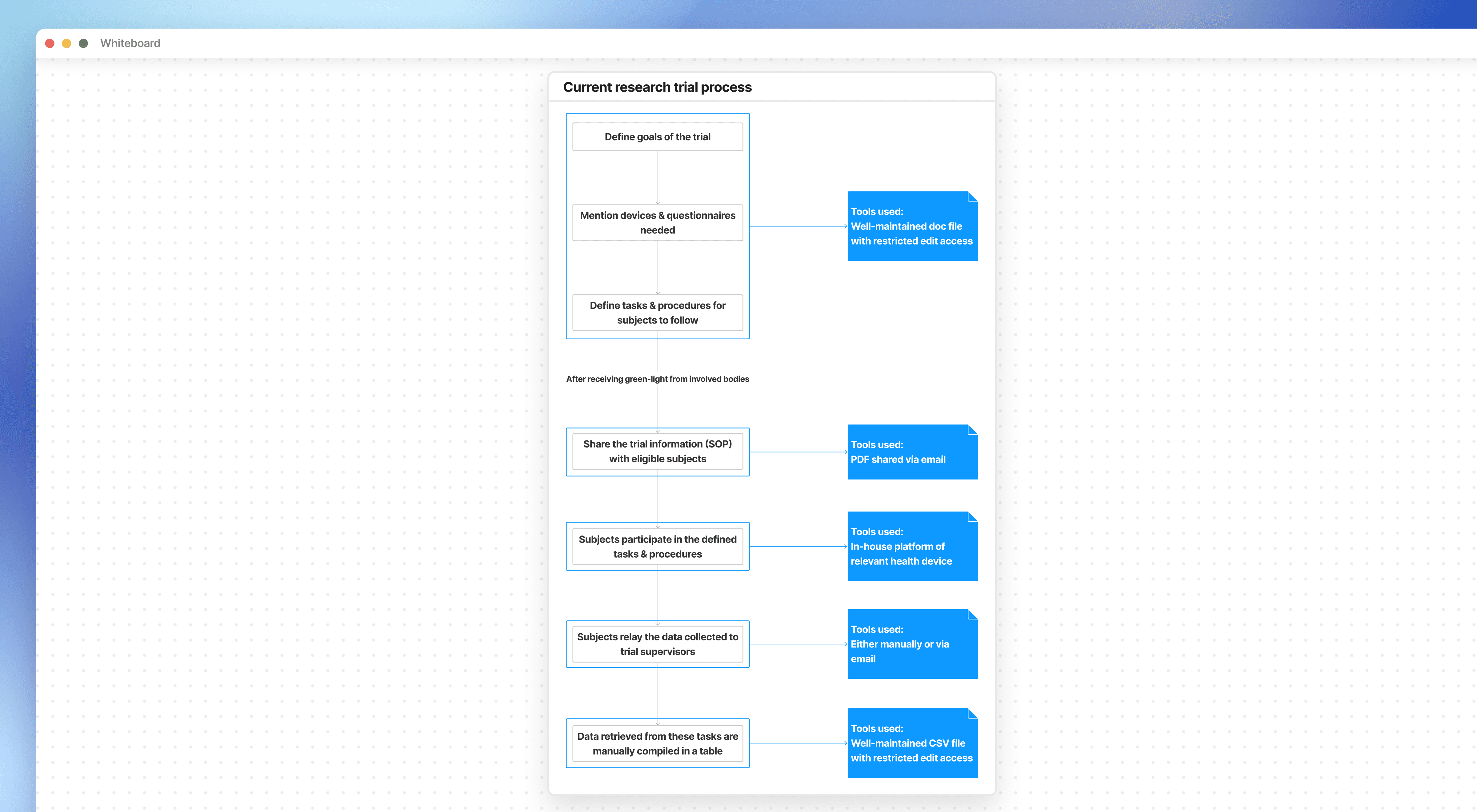
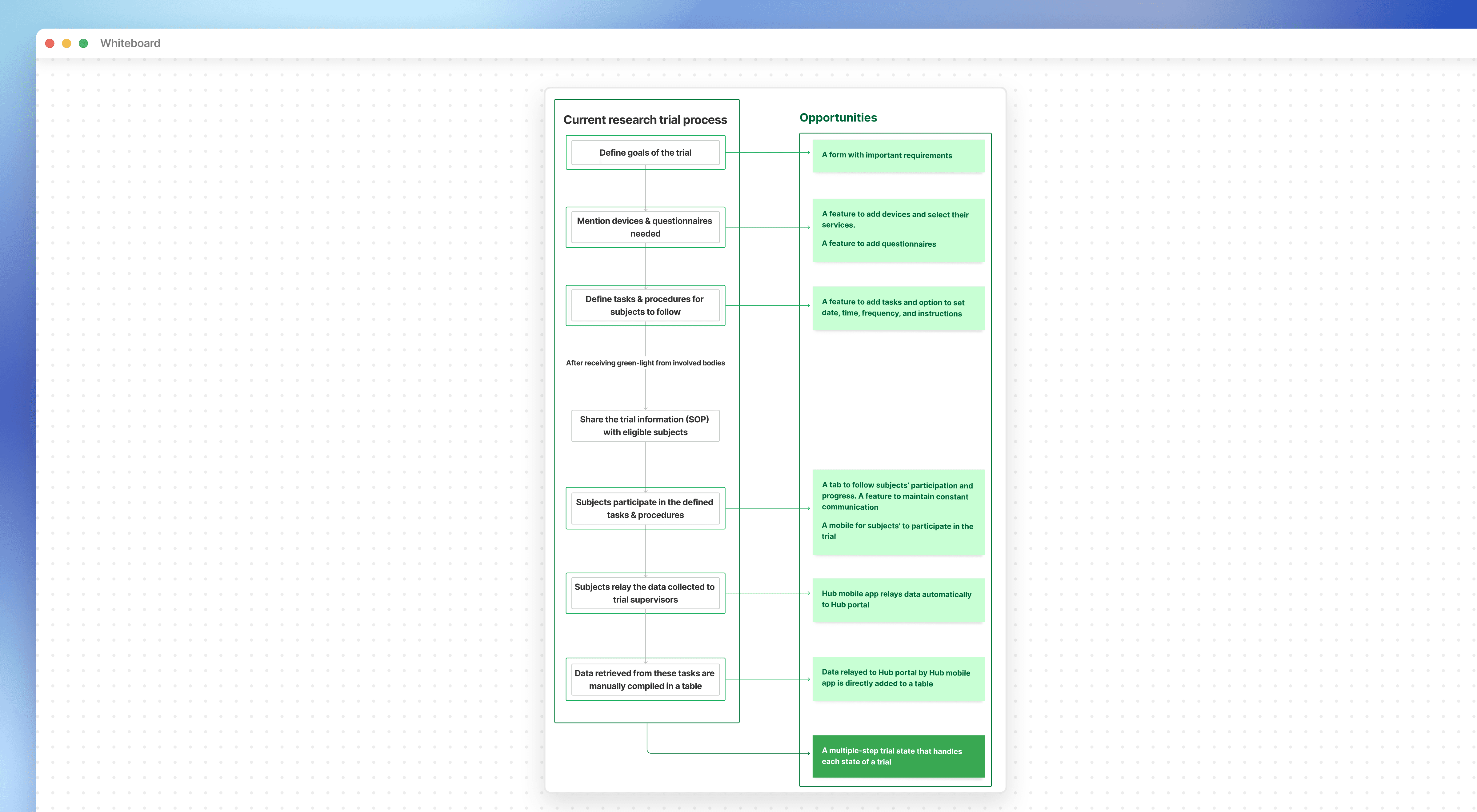
Armed with reliable and actionable insights, we mapped the current clinical trial flow. In this flow chart, we have included all the steps involved in a trial, and we have mapped each step with the tools used.
Ideation
Our main goal for the ideation phase was to come up with a viable set of solutions that could replace the need for multiple platforms.
Along with this, we also focused on how to handle all the stages included in a clinical trial.
Key opportunities
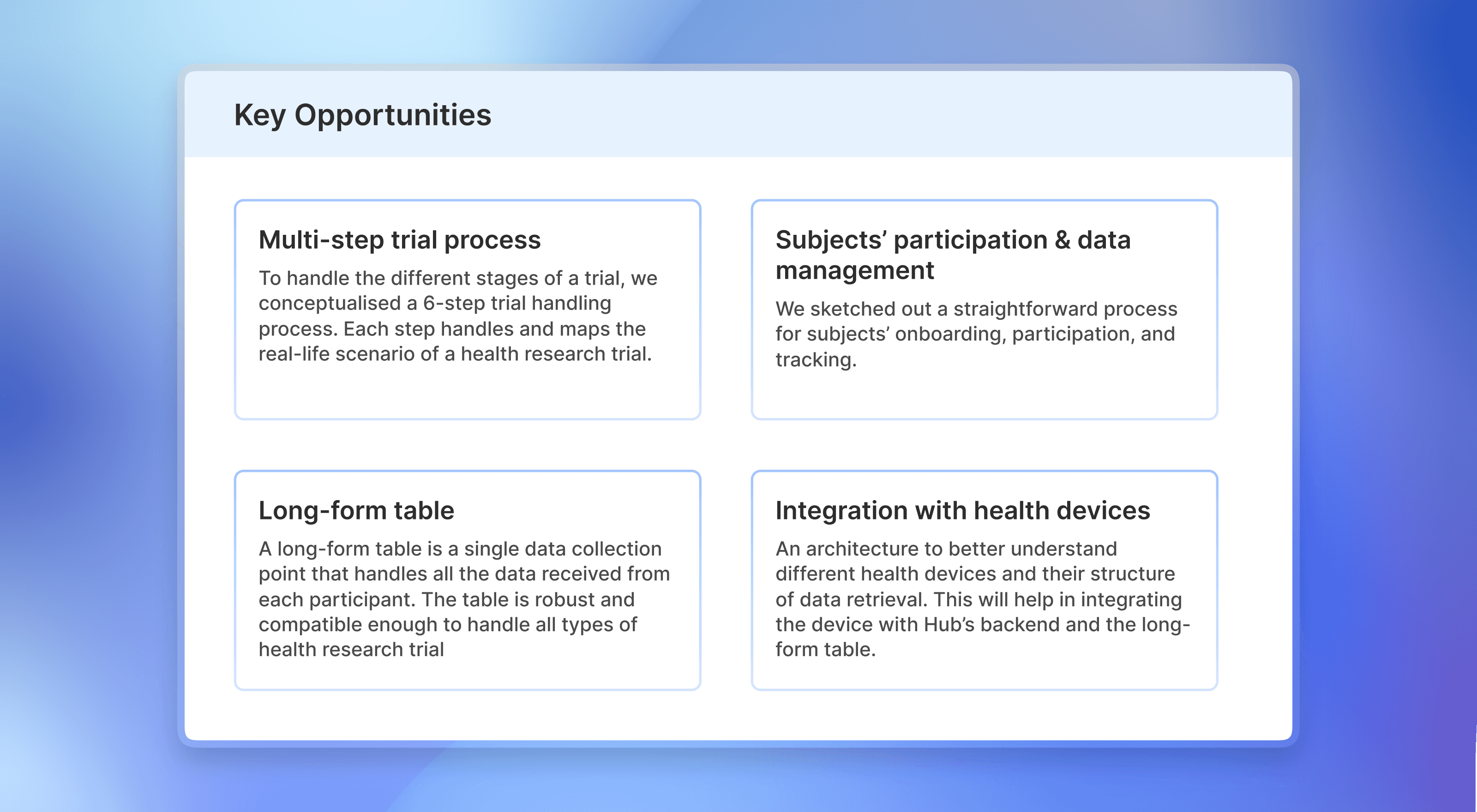
After a few weeks of ideation, we narrowed down our project's scope and identified key opportunities, refining our focus for further planning and implementation.
Opportunities mapping
With key opportunities at our disposal, we went ahead and mapped them with the current trial flow. This process helped us in creating the user flows and information architectures.
Flows & Architectures
We had a lot more clarity and we were able to map various userflow and IA.
Solution
To ground the redesign in real user needs, I established three guiding objectives before starting the design process.
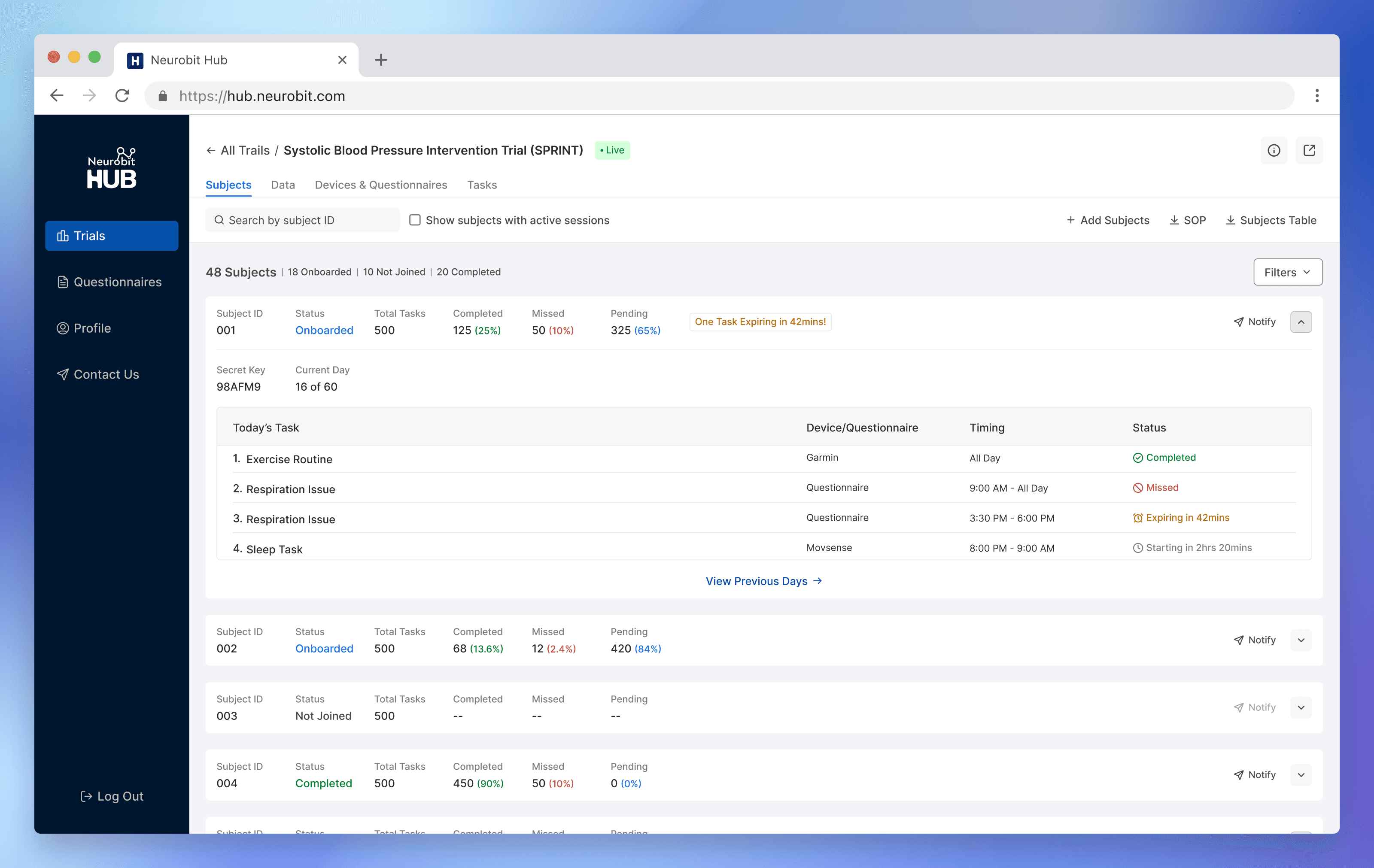
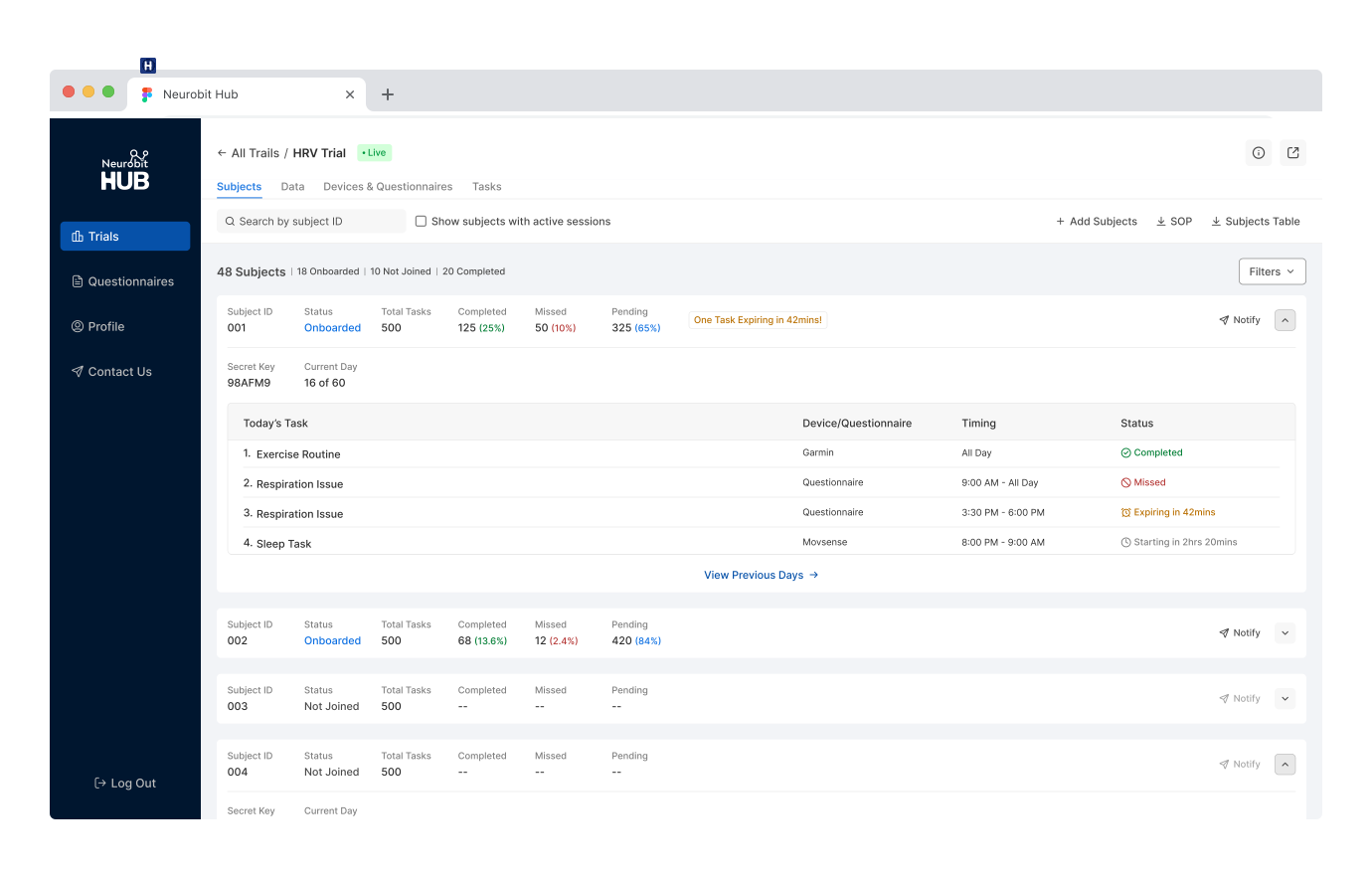
A trial can be navigated through four tabs, with a dedicated section for participants, providing a comprehensive, one-stop solution to grasp all aspects related to the subjects.
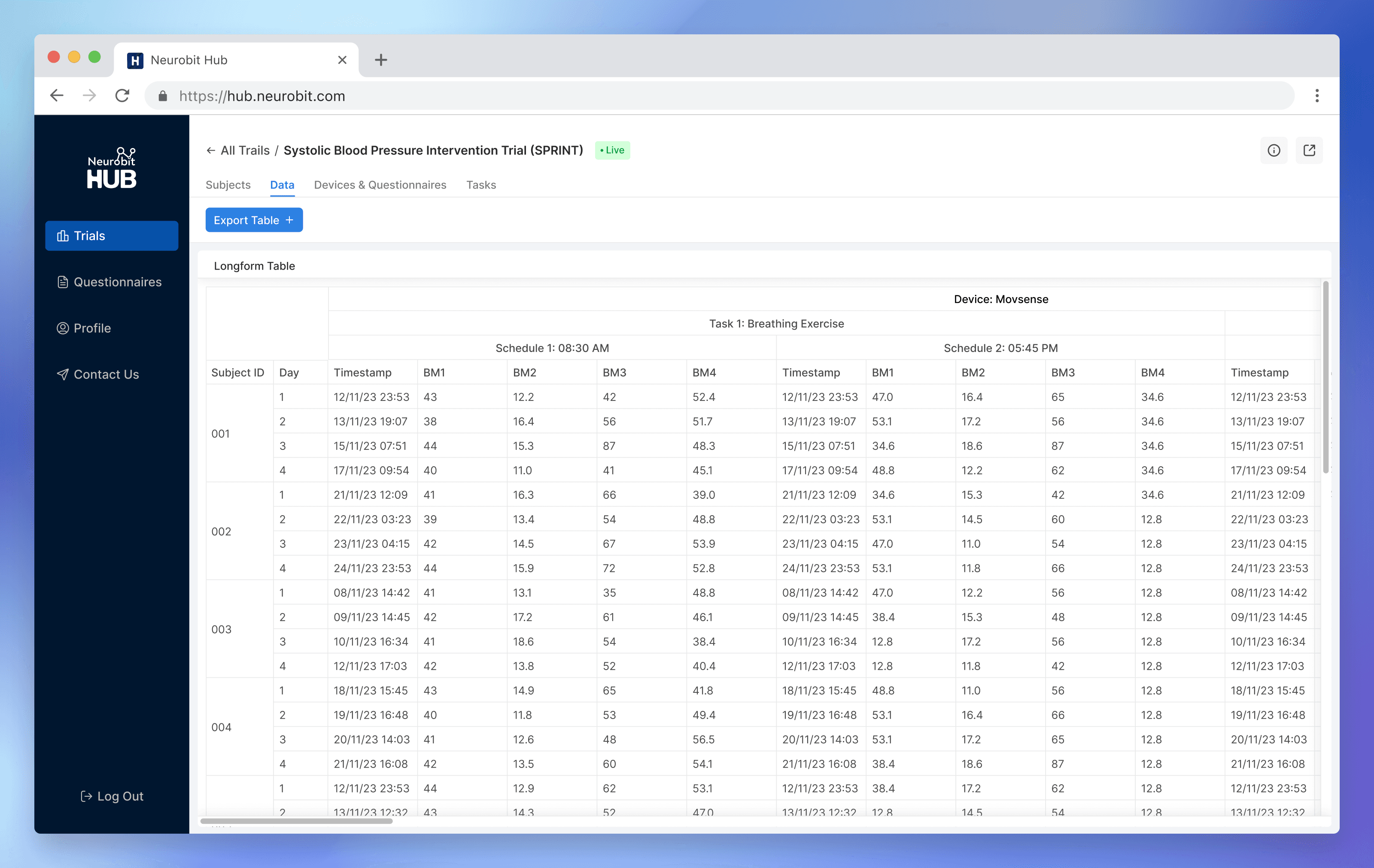
The long-form table has a distinctive architecture that captures every aspect of a trial, including details about devices, subject tasks, individual subjects, and more.
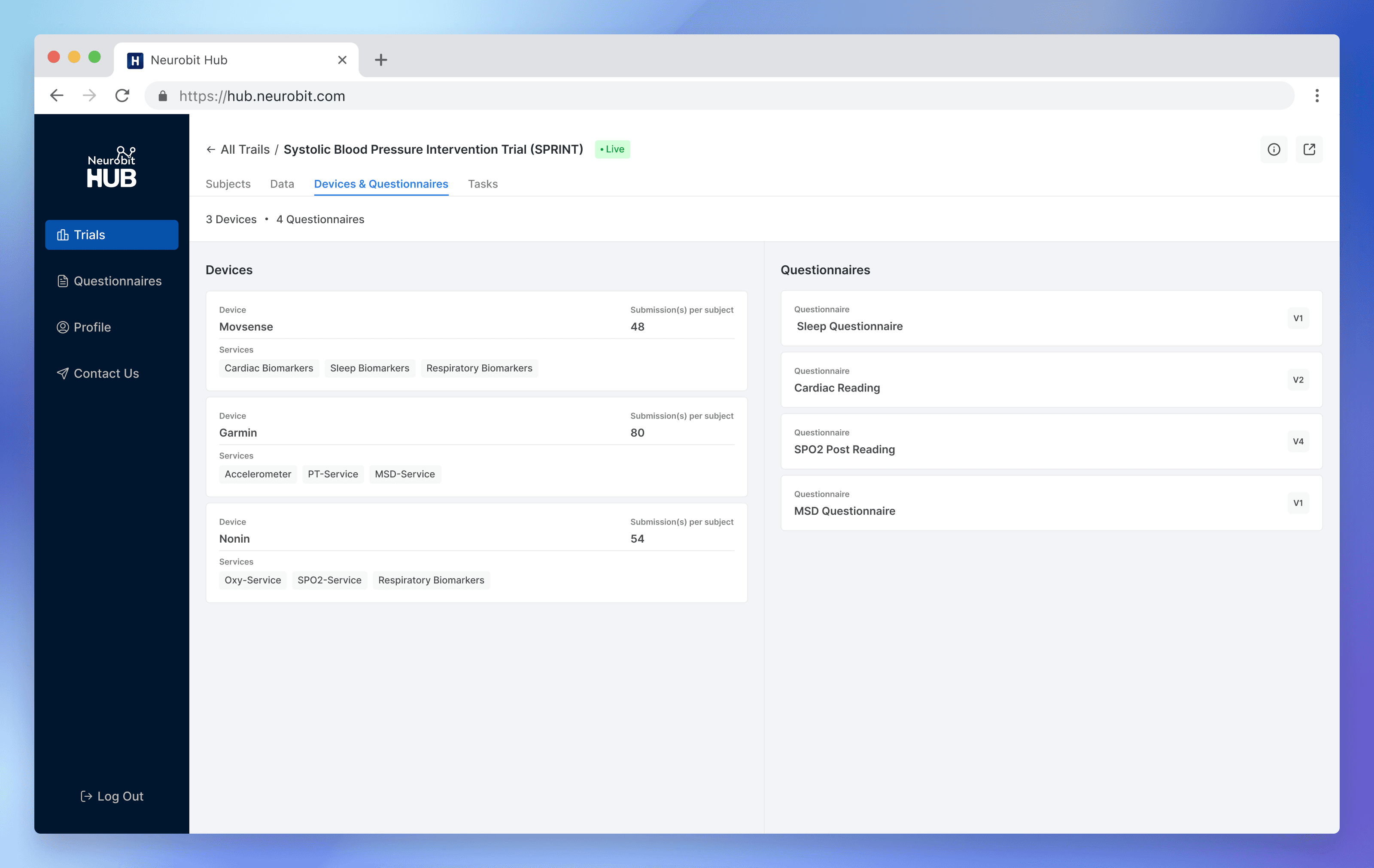
Since devices and questionnaires are two main data-collection points, all the interactions related to them can be found in a single tab.
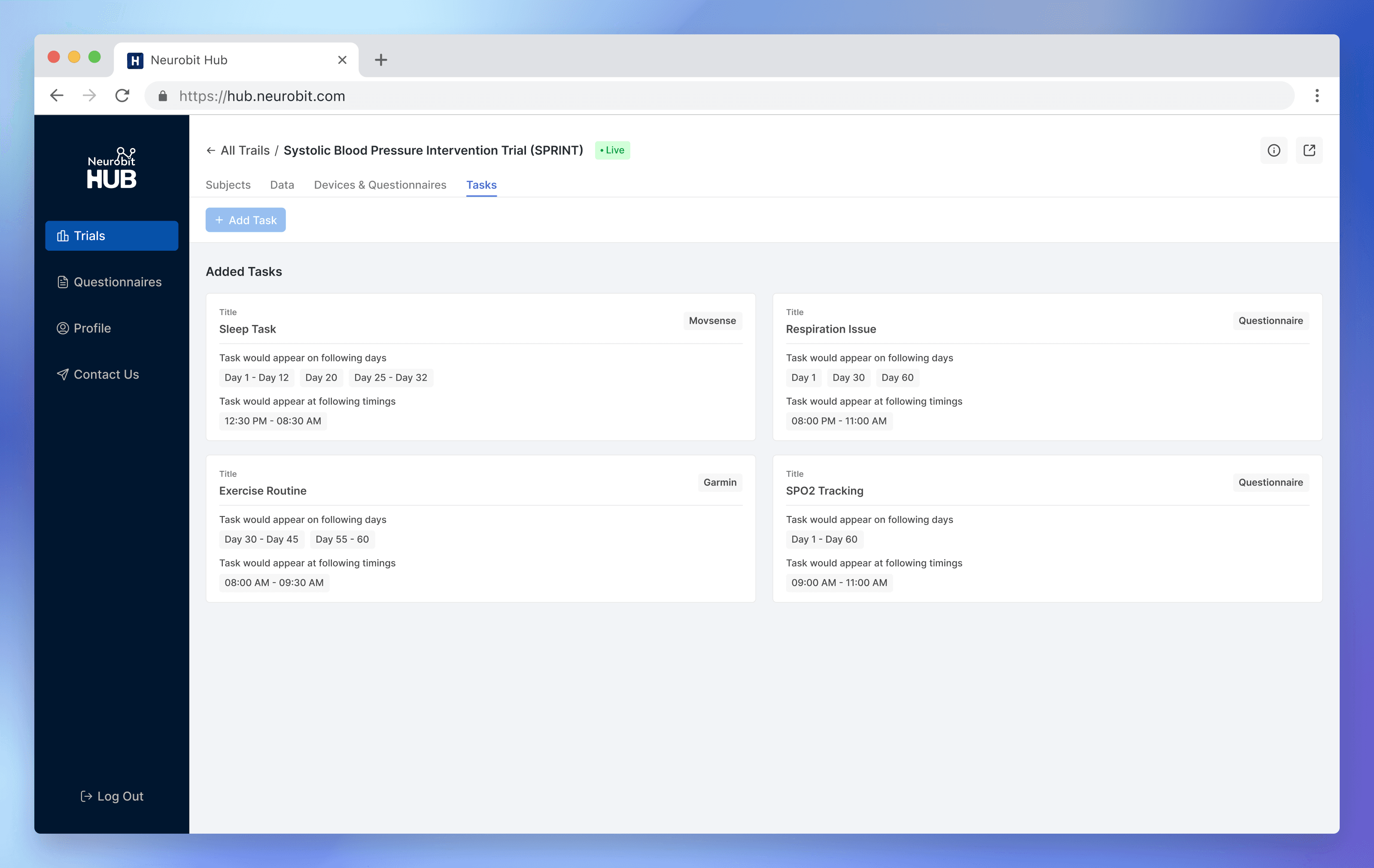
Participants will interact with the trial through tasks; therefore, all actions necessary for task creation can be found here.
Supplementary Information
This product is extensive, and I can only provide limited information here. For a more in-depth discussion, please feel free to get in touch.