Silq / Apr - Jun 2025
Rethinking Tasks Workflow for Operations Users at Silq
I redesigned the tasks workflow at Silq to better reflect and support the daily rhythms of operational work.
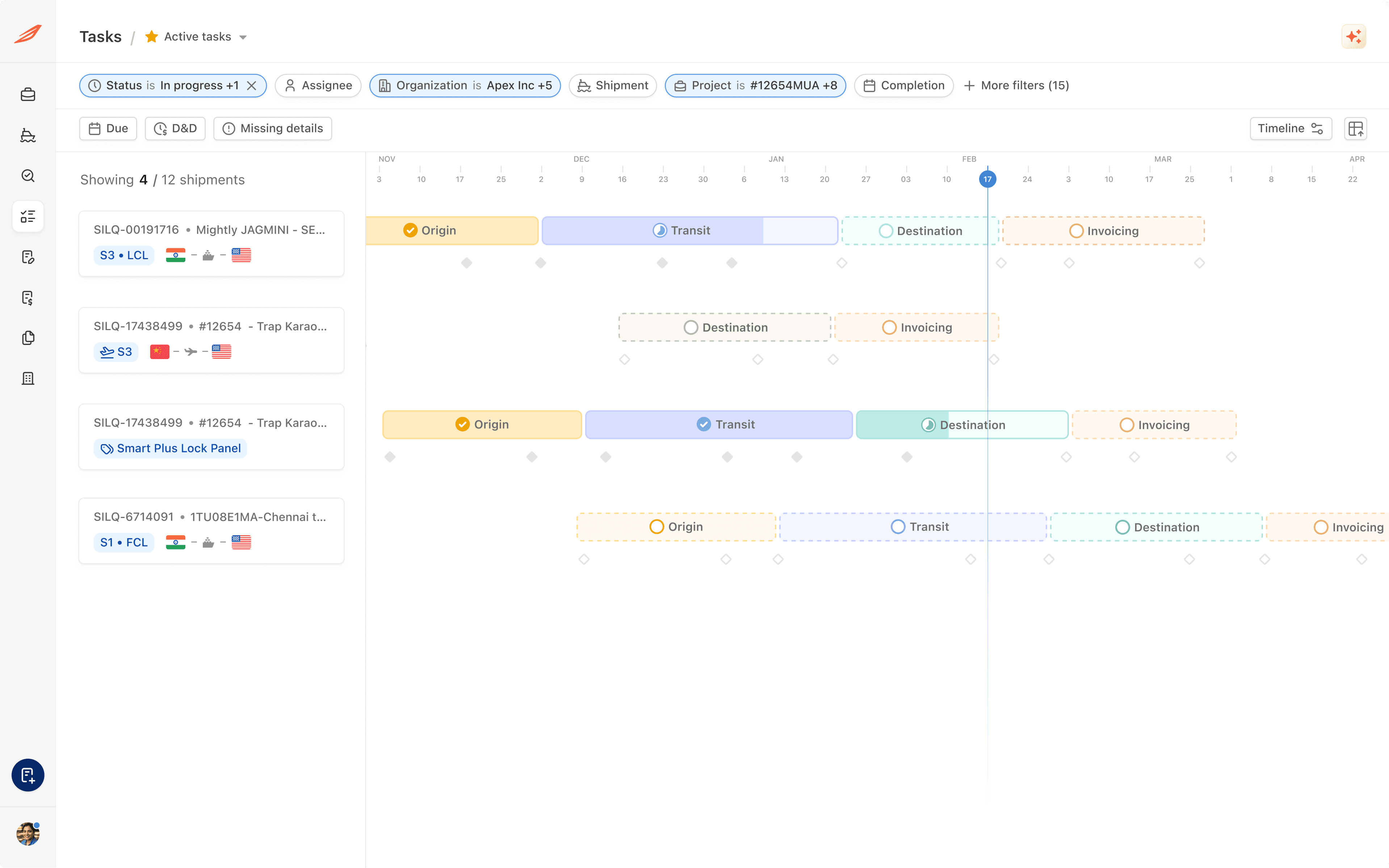
Introduction
Silq has an online tool that is used by our operators and also our clients.
For our clients this tool provides assurance and clarity on how their shipment is progressing.
Operators on the other hand use this tool to carry out every single action needed for a shipment to be possible and successful.
Amongst myriad of operator workflows, there is one that’s very quintessential for operators’ daily work: tasks.
Operators check their tasks first thing when they start their day, and based on the results they design their day. Through out the day, they keep track of their work through tasks.
Problem
The existing task experience had been built early in Silq’s product lifecycle and had not been revisited as the platform scaled.
Tasks is such a crucial and inherent workflow, yet never evolved into a device that truly served users, accumulating significant UX debt along the way.
Research
To understand how tasks were used across the organisation, I conducted a series of workflow discussions, and shadowing sessions with operations teams.
The research included 12 members of the operations team across procurement, destination, and finance functions.
Findings
Different teams are involved at a different stage of shipment lifecycle
The operations team consists of the procurement, destination, and finance teams, who work across the shipment lifecycle and coordinate during stage handovers.
Procurement Team
Destinations Team
Finance Team
CNSHA
USLAX
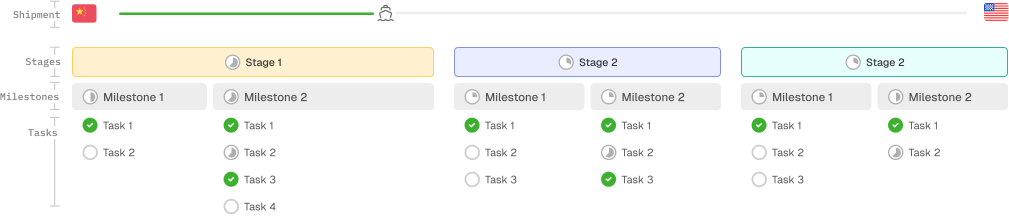
Tasks follow templates
Tasks workflow is designed for it to mimic progress of the physical world.
Tasks represent the progress of a shipment. To manage this clearly, they are organised in a hierarchy of milestones, stages, and tasks.
Today was missing as a concept
Ops work revolves around what needs to be done today, yet the system had no notion of “today”. Users often exported data and recreated this logic elsewhere.
Not all active work is important
Tasks could be untouched, in progress, or blocked, but all appeared under the same active state, making progress and accountability unclear.
Completion time matters
Completing tasks too early can disrupt downstream work, while delays can cascade across the shipment timeline. The goal is completing the right work on the right day.
Different users, different needs
Executives, managers, and operators use the same task data differently, but rigid views made it difficult to support these needs.
Design Objective
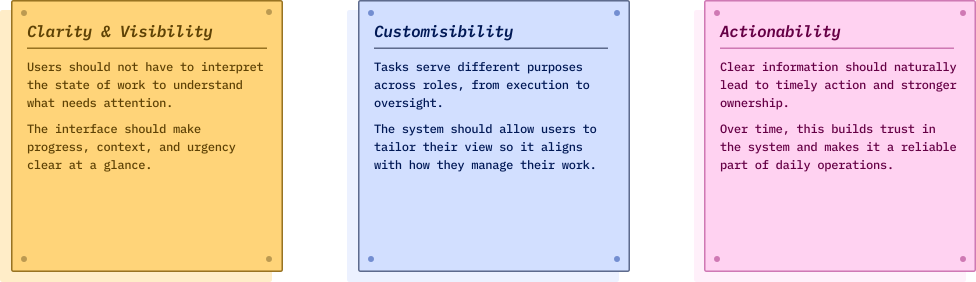
To ground the redesign in real user needs, I established three guiding objectives before starting the design process.
Older Experience
The previous interface had grown outdated and no longer reflected the needs of day-to-day operational work. It presented information, but did little to help users act on it when it mattered.
Add filter
Save view
Reset view
task
status
resource
planned
estimated
actual
actions
Demo tasks
Columns
Export CSV
Multimodal leg handover documentation
Active
S2
05/14/2024
05/17/2024
-
Pre-shipment cargo fumigation validation
Done
Project
04/28/2024
05/01/2024
05/02/2024
HS code reconciliation for mixed pallets
Done
Inspection
06/18/2024
06/20/2024
06/20/2024
Carrier allocation for split consignments
Active
S4
01/05/2026
01/05/2026
-
Cargo readiness milestone confirmation
Active
Inspection
03/01/2025
03/01/2025
-
Bill of lading amendment workflow
Done
Project
02/06/2025
02/06/2025
02/06/2025
Final mile carrier SLA validation
Done
Project
01/14/2025
01/14/2025
01/14/2025
Origin documentation discrepancy audit
Active
S3
12/26/2024
12/26/2024
-
Consolidation deconsolidation planning
Done
Inspection
08/09/2024
08/13/2024
08/13/2024
Customs exam escalation handling
Active
S5
10/16/2024
10/16/2024
-
Free-time extension negotiation
Active
Project
11/03/2024
11/03/2024
-
Transshipment delay root-cause mapping
Active
S5
10/16/2024
10/16/2024
-
Dangerous goods packing declaration check
Done
Inspection
09/27/2024
09/27/2024
09/27/2024
Partial shipment release coordination
Done
Project
09/11/2024
09/11/2024
09/11/2024
Yard dwell time anomaly analysis
Active
S2
05/14/2024
05/17/2024
-
Multimodal leg handover documentation
Active
S2
05/14/2024
05/17/2024
-
Multimodal leg handover documentation
Active
S2
05/14/2024
05/17/2024
-
Tasks
Search...
45 Tasks
Projects
Shipments
Tasks
My Rates
Migrate
Insights
Network
Network
Inspections
Request quote
Messages
Notifications


Revamped Experience
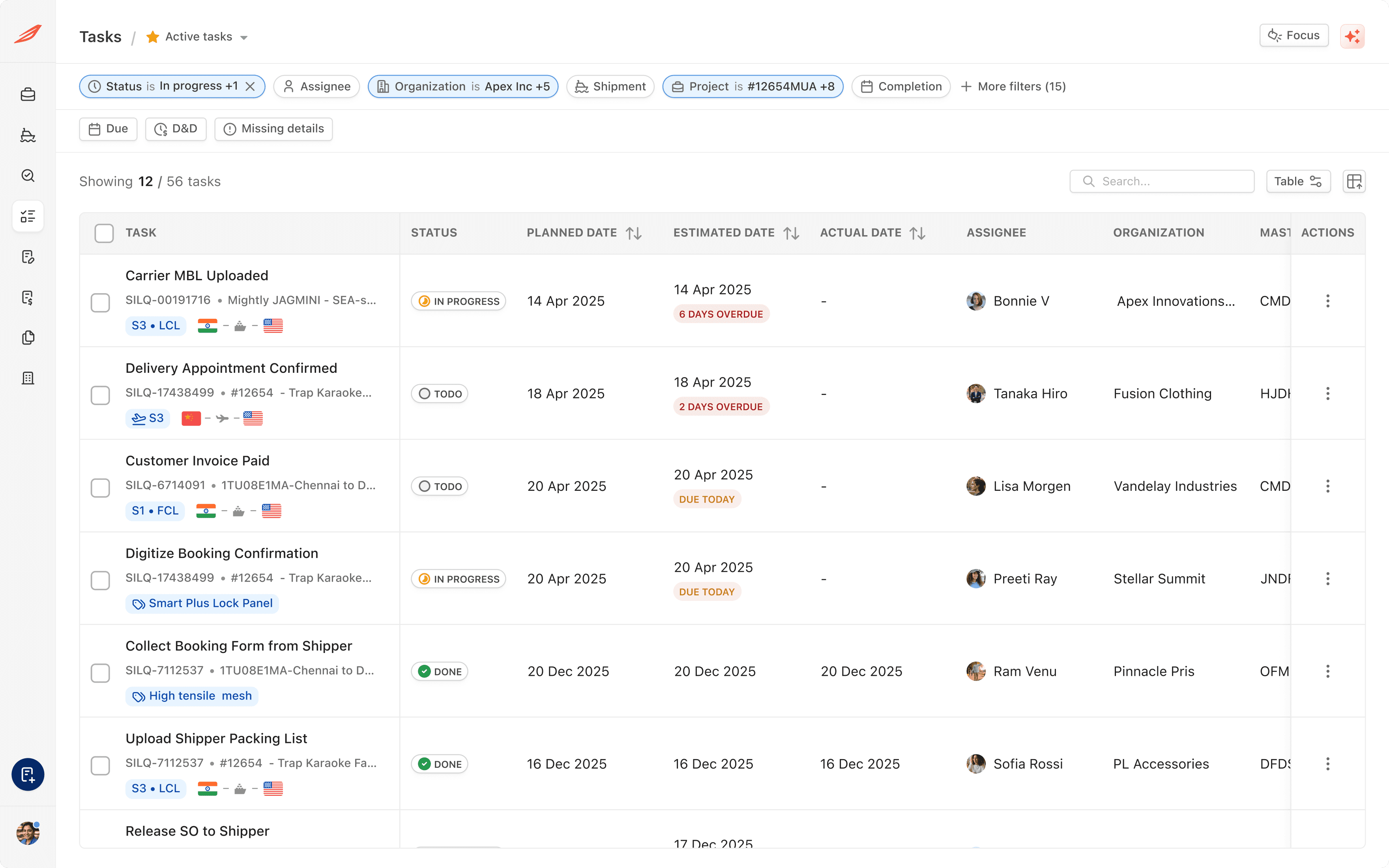
For the newer version, I iterated and introduced a brand new design pattern for complex and detail heavy table. This version allowed users to navigate the views and results with amazing precision.
To ground the redesign in real user needs, I established three guiding objectives before starting the design process.
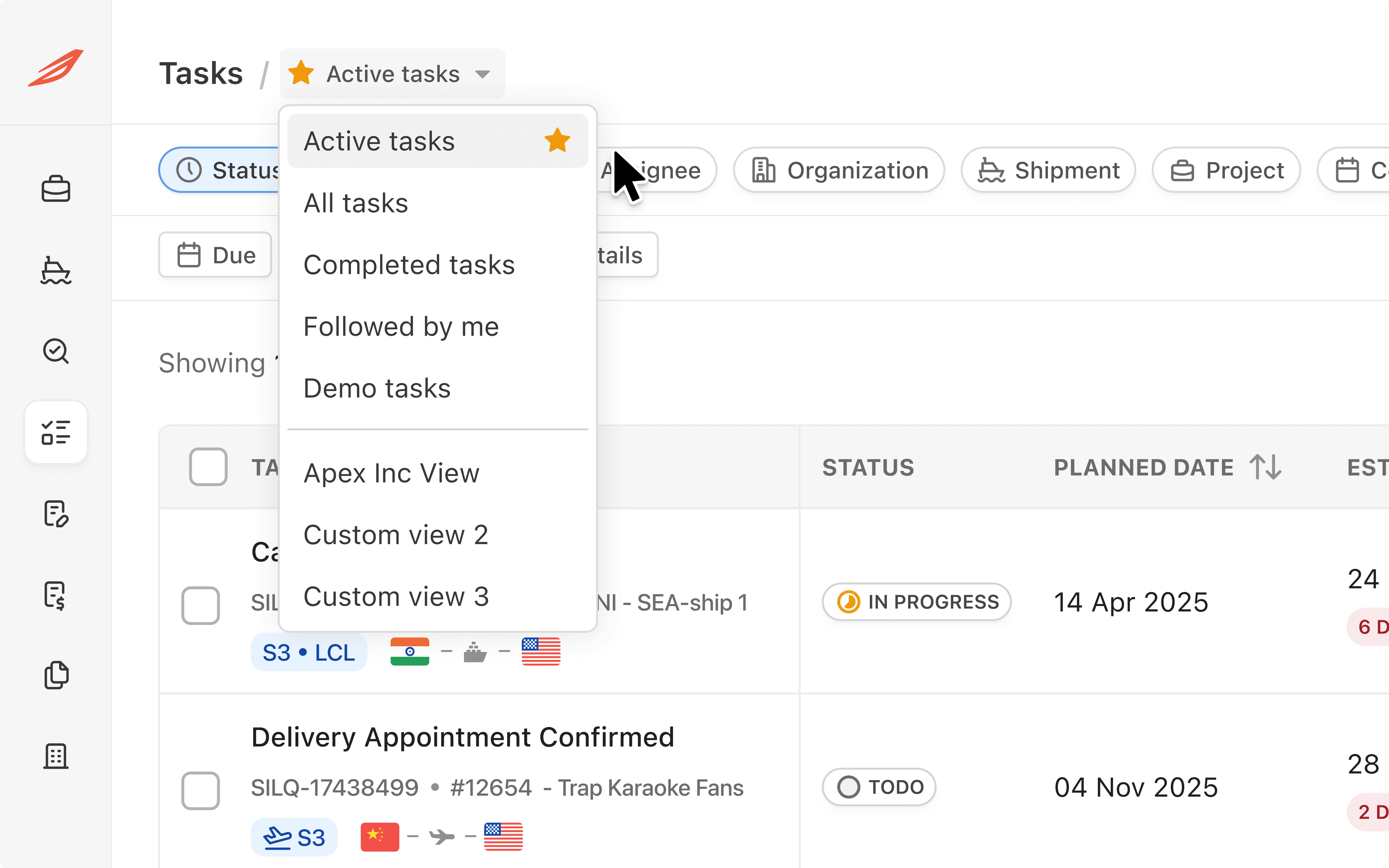
To ground the redesign in real user needs, I established three guiding objectives before starting the design process.
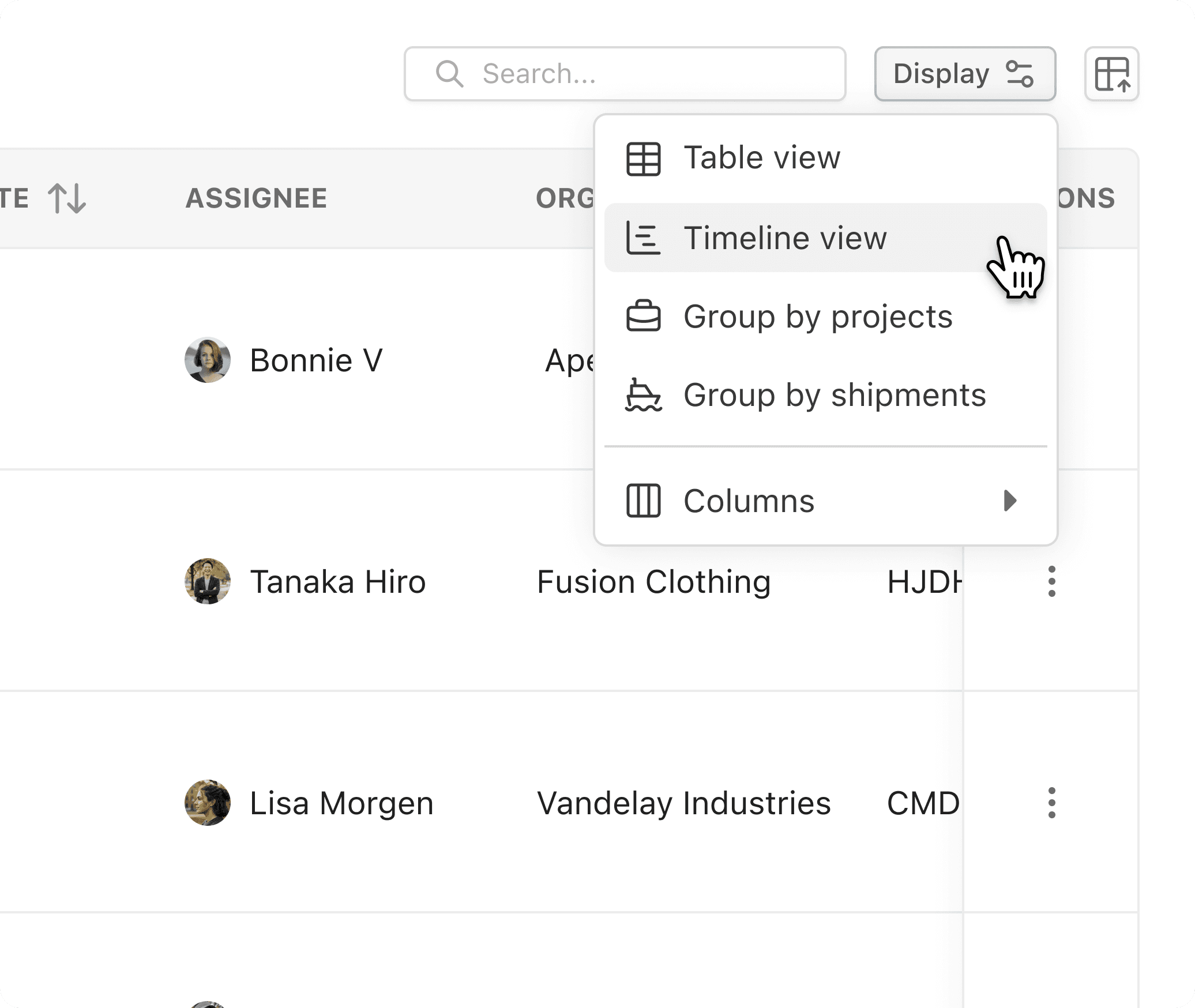
To ground the redesign in real user needs, I established three guiding objectives before starting the design process.
To ground the redesign in real user needs, I established three guiding objectives before starting the design process.
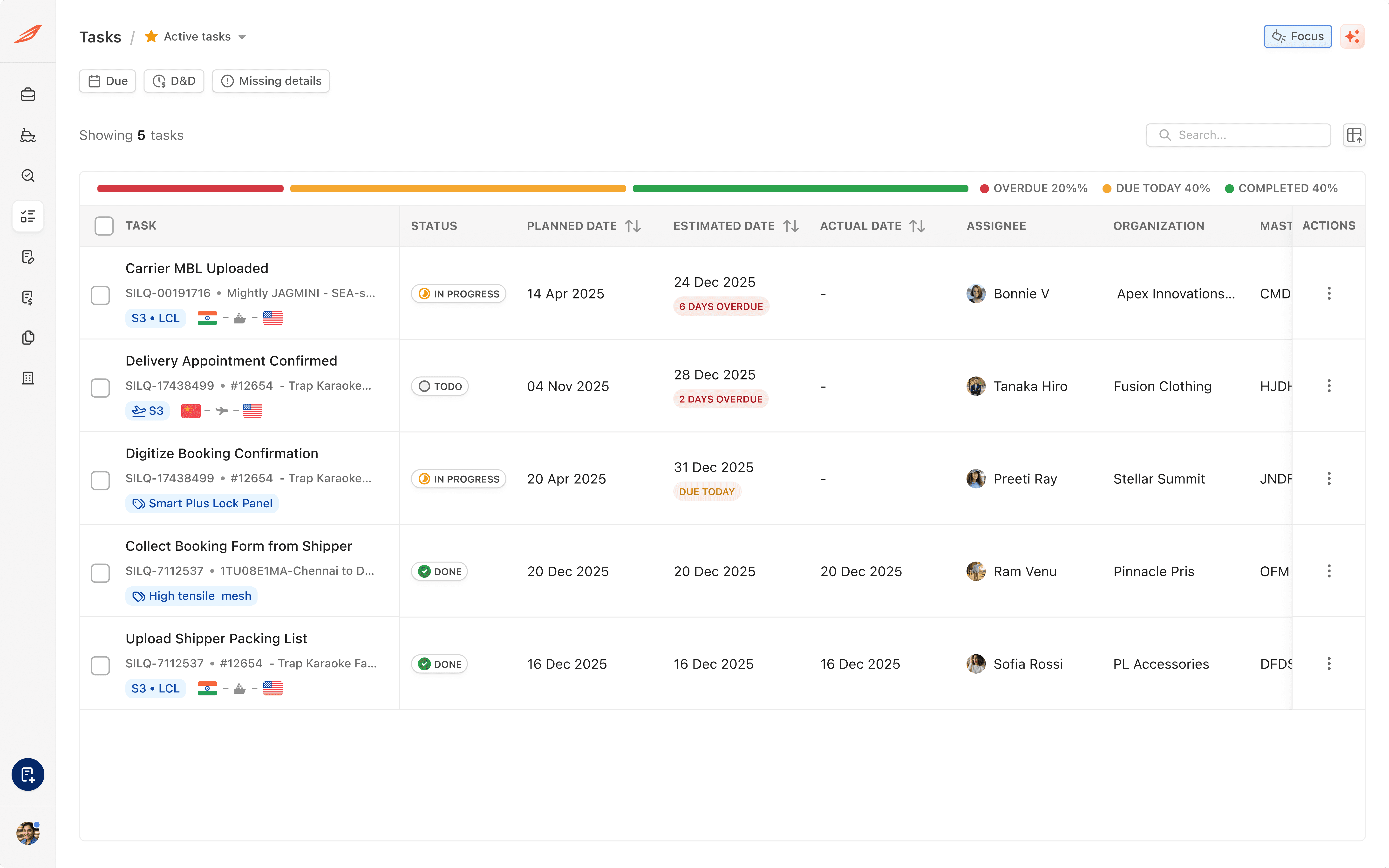
To ground the redesign in real user needs, I established three guiding objectives before starting the design process.
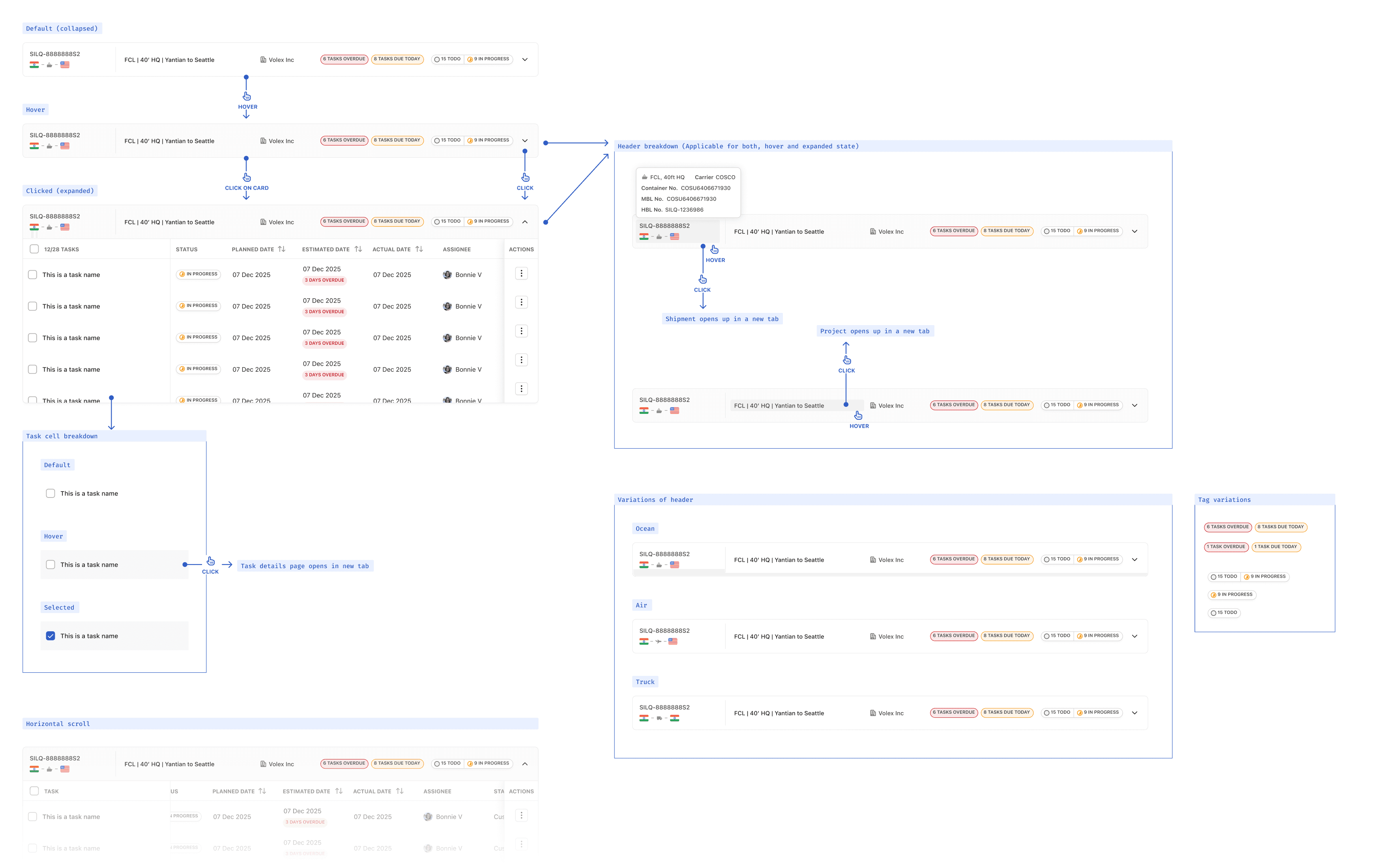
To ground the redesign in real user needs, I established three guiding objectives before starting the design process.